- Ergonomic Products
- Ergonomic Furniture
- Yoga
- Meditation
- Pilates
- Air Treatment
- Blog
- Resources
- About Us
- Wholesale
- Ergonomic Products ▼
- Ergonomic Furniture ▼
- Yoga ▼
- Meditation ▼
- Pilates ▼
- Air Treatment ▼
- Blog
- Resources ▼
- About Us
- Wholesale
- Sign in

Quick answer: Yes — 10 minutes of yoga a day is enough to reduce stress, improve flexibility, and build a consistent practice. This guide includes a complete 12-pose sequence you can do anywhere, no experience needed.
Life gets busy. Work, family, school runs, grocery shopping — it all adds up. When schedules get full, yoga is often the first thing to go. But busy times are usually when we need yoga the most. A short, consistent practice is more effective than sporadic long sessions.
This guide gives you everything you need: a complete 10-minute yoga sequence, step-by-step instructions for each pose, and answers to the most common questions about short yoga practices.
Before you begin, keep two things in mind:
Don't rush. Ten minutes isn't long, but moving slowly and with breath awareness will make it feel like a full session. Quality of attention matters more than speed.
Prepare your space. Clear a small area, put on comfortable clothes, and set a timer. That's all you need.
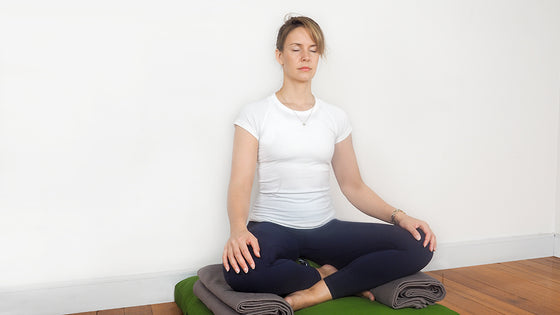
Before launching into movement, honour yourself and your practice with a few moments of quiet stillness. Sit in easy cross-legged pose with a tall spine. Before moving, spend a few moments noticing how you feel — physically, mentally, and emotionally. Observe the quality of your breath: is it fast or slow, shallow or deep?
Notice the textures of your mind. Is it busy, jumbled, tired, spacious, clear, or focused? Take deep breathe in and long breath out. Become fully present.
Timing: 1-2 mins
Key Benefits: Grounds the mind
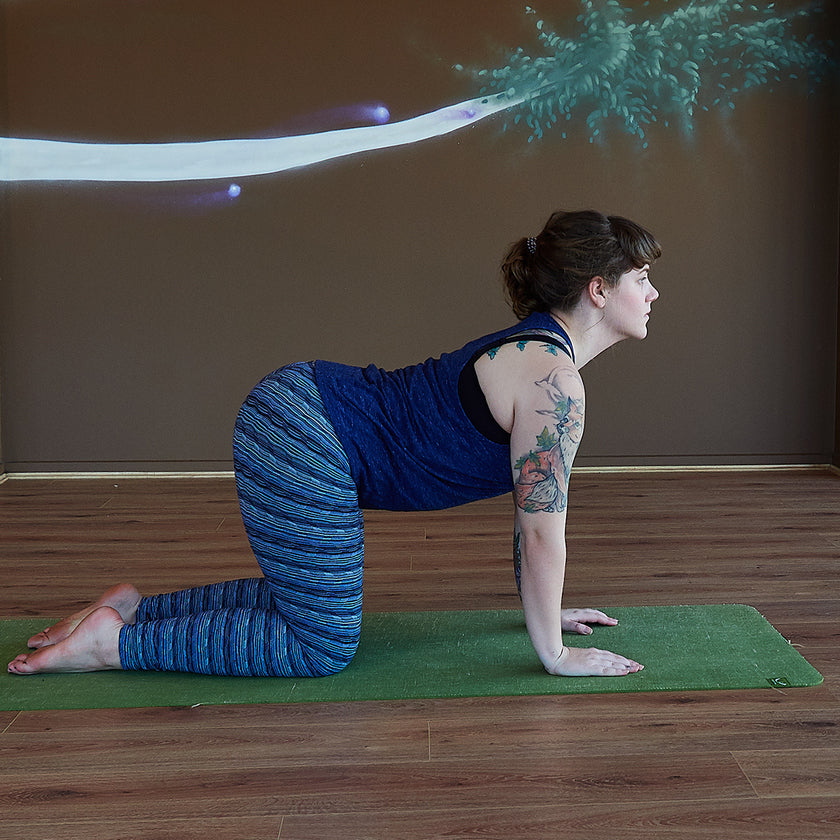

Come to hands and knees, hands shoulder-width, knees hip-width apart. Inhale: lift the tailbone and gaze, arching into a gentle backbend. Exhale: round the spine toward the ceiling, drawing the navel in. Repeat for 6 smooth, breath-led rounds.
Timing: 6 rounds
Key Benefits: Eases lower-back and gently tones the core.

From cat pose, tuck the toes, lift the knees, and press the hips back and up into an inverted V-shape. Pedal the heels gently to warm the hamstrings. Then find stillness: press hands and feet evenly, lengthen the spine. If heels don't reach the floor, keep knees slightly bent — the priority is a long spine, not straight legs.
Timing: 5–10 breaths
Key Benefits: Stretches arms and legs. Calms the nervous system.
Want more? Try exhaling through the mouth with your tongue out while making a long ‘hahhh’ sound.

Walk the feet toward the hands. Let the upper body hang heavily over the thighs. Clasp opposite elbows, or let the arms dangle freely. Gently shake the head "yes" and "no" to release neck tension.
Timing: 5 breaths
Key Benefits: Soothes the mind, improves blood circulation.

Grounding the feet firmly, slowly roll up to standing, stacking each vertebra one at a time. Ground evenly through both feet. Feel weight at the fingertips and lightness at the crown. Hold the natural curves of the spine — no rigid bracing.
Timing: 5 -10 breaths
Key Benefits: Aligns the spine. Creates length through the torso.
Standing tall, inhale and sweep the arms wide and up overhead (palms touching if comfortable). Exhale, lower the arms back to your sides. Keep shoulders relaxed and away from the ears throughout.
Timing: 5 rounds
Key Benefits: Deepens breathing. Lifts energy.

Step the feet wide. Turn the right foot out, left foot slightly in. Raise arms to shoulder height. Inhale to lengthen; exhale and reach the right hand down toward the right shin, stacking the wrists and shoulders. Top arm reaches toward the ceiling. Hold 5 breaths, then switch sides.
Timing: 5 breaths each side
Key Benefits: Tones waist. Strengthens legs and feet.
Return to downward-facing dog as a transition to floor poses. Use these breaths to settle the breath and shift gears from standing to floor work.
Timing: 5 breaths
Lie on your back with knees bent, feet hip-width apart on the floor, arms resting loosely beside the body. Tuck the chin slightly so the back of the neck is long. Close your eyes and let the breath settle into a relaxed rhythm. Allow gravity to do the work.
Timing: 1 minute
Key Benefits: Releases psoas tension. Spinal alignment.

From constructive rest, turn palms down. On an inhale, press into the feet and lift the hips away from the mat. Exhale and lower the spine slowly, vertebra by vertebra, back to earth. Repeat 3 times.
Timing: 3 rounds
Key Benefits: Boosts energy. Increases spine strength and suppleness.


Widen the feet to mat-width. Exhale and drop both knees to the right. Inhale back to centre. Exhale and drop to the left. That's one round. Keep both shoulders grounded throughout.
Timing: 3 rounds
Key Benefits: Massages digestive organs Releases lower back.

Even in a quick sequence, savasana is non-negotiable. Lie flat on your back, legs slightly apart, palms facing up. Let the feet fall open. Surrender the full weight of your body to the floor. Commit to stillness — this is where the benefits of the practice integrate.
Timing: 1–2 minutes
Key Benefits: Full body relaxation. Quiets the mind.
Tip: before relaxing, inhale and squeeze every muscle tightly — feet, legs, fists, face — then release completely on the exhale. This accelerates the drop into rest.
A long practice feels wonderful, but research and yoga tradition both agree: regularity beats duration. Ten focused minutes every day will develop strength, flexibility, and mindfulness more effectively than an hour-long class taken occasionally. Even 1–2 poses practised on alternate days will grow your practice over time. The clock is not the measure of progress — showing up is.
Can 10 minutes of yoga a day actually be effective?
Yes. Even 10 minutes of yoga daily can improve flexibility, reduce stress hormones, and calm the nervous system. The key advantage of a short practice is that it's easy to do consistently — and consistency is what produces lasting results. A daily 10-minute practice will outperform a weekly hour-long session over time.
What is the best yoga sequence for busy people?
A sequence that works across the whole body without requiring equipment or much space. The 12-pose sequence above — including Cat-Cow, Downward Dog, Forward Fold, Mountain Pose, Triangle, and Savasana — is quick, energising, and suitable for all levels. It addresses spine mobility, leg flexibility, breathing, and nervous system regulation in around 10 minutes.
When is the best time to do a short yoga practice?
There is no single best time — the best time is when you will actually do it. That said, mornings tend to energise the body and set a calm tone for the day, while evening practices promote relaxation and better sleep. If you work at a desk, a midday practice can reset posture and reduce tension.
Is this sequence suitable for beginners?
Yes. Every pose in this sequence is beginner-friendly and adaptable. There are no complex balances or advanced postures. The most important principle for beginners is to move with the breath and avoid forcing any pose. Modifications are noted throughout.
How often should I practise yoga if I'm short on time?
Daily practice — even just 10 minutes — is the most effective approach. If that's not possible, aim for 4–5 times per week. Consistency builds the muscle memory, body awareness, and habit loop that make yoga beneficial long-term. Duration matters far less than frequency.
Consistency and dedication always outperform duration. Thank yourself for taking the time to practise — then get on with your day.